The bet each model is making
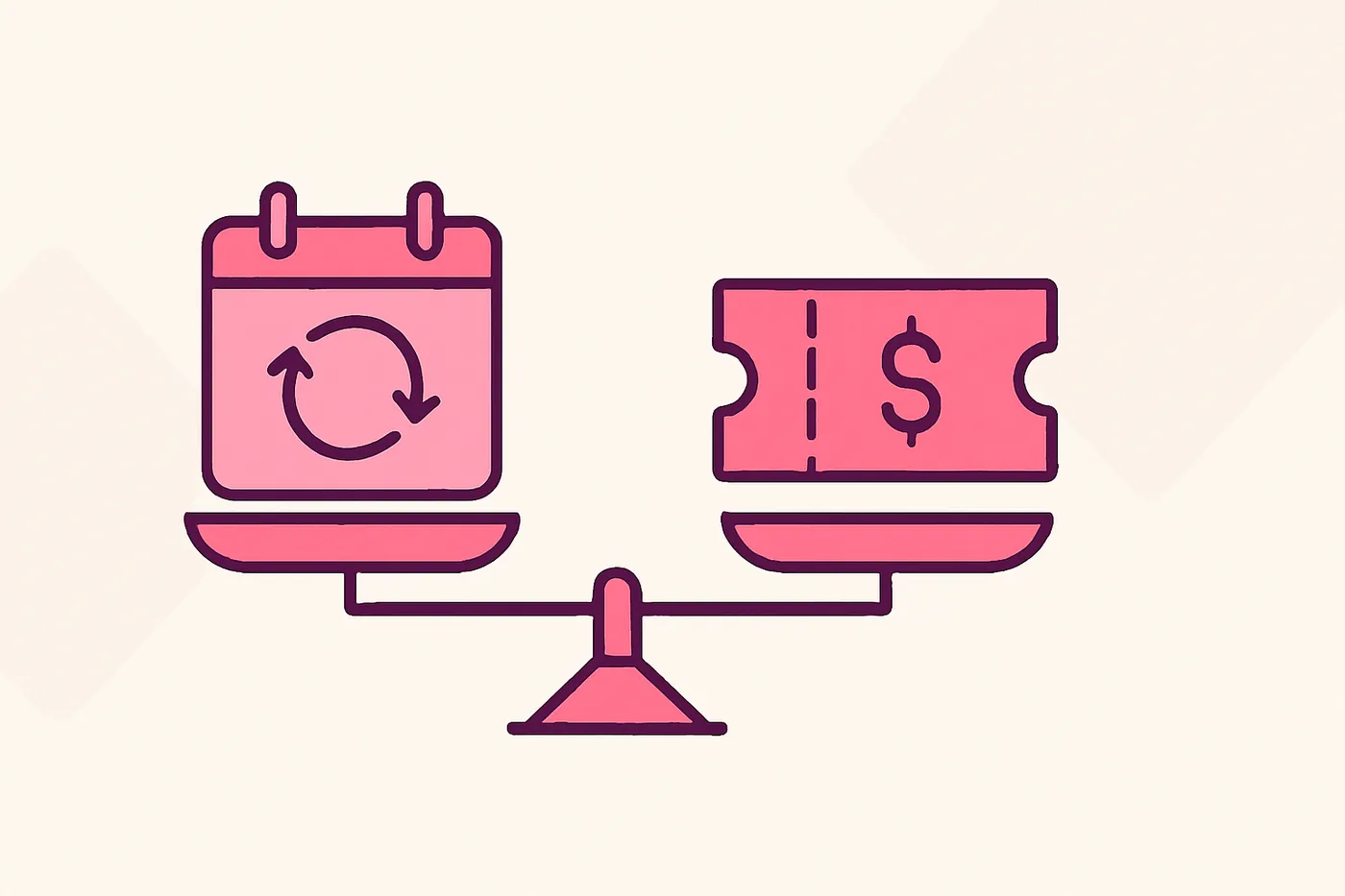
A subscription platform is making a bet that you'll run enough events for the monthly fee to average out to less than paying per event would cost — and for organizers running events constantly (a venue, a recurring conference series, an agency managing many clients' events), that bet often pays off. A pay-per-event model makes the opposite bet: that many organizers run events occasionally, not constantly, and shouldn't be paying for months where nothing is happening.
The actual math
The comparison is simple once you frame it correctly: take a subscription's monthly cost, multiply by the number of months you'd realistically stay subscribed, and compare that total to what you'd pay per event, per event, over the same period. If you run one event a quarter, a monthly subscription is charging you for two idle months for every one you actually use it — and that gap only gets worse the less frequently you run events.
The idle-month problem
Idle months are the part subscription pricing structurally depends on — some subscribers paying for months they don't fully use is part of how the average economics work out for the platform. That's a completely reasonable trade for someone running events continuously. It's a straightforwardly bad trade for someone running two or three events a year, who ends up subsidizing months of access they never touch.
When a subscription genuinely wins
If you're running events often enough that you'd hit or exceed the subscription's break-even point most months, a subscription can work out cheaper in raw terms — and some subscription tiers bundle features (advanced analytics, dedicated support, higher usage limits) that a pay-per-event model might price separately or not offer at all. Worth actually running the comparison rather than assuming either model is universally better.
The hidden variable: commitment
Beyond the raw math, a subscription is also a commitment decision, not just a pricing one — you're committing to a recurring charge regardless of whether next month brings an event or not. A pay-per-event model removes that commitment entirely: there's simply nothing to pay, or cancel, in a month where you're not running anything.
Working out your own number
The honest exercise is this: estimate how many events you'll realistically run over the next year, multiply that by a pay-per-event platform's typical fee for your event size, and compare it to twelve months of a subscription. SPION's own model is pay-per-event — a one-time fee based on your event's ticket capacity, nothing owed between events — built specifically for organizers who'd rather not carry a monthly bill for months they're not actually running anything.
Pay only when you actually publish
No monthly fee, no annual contract — a one-time fee per event based on capacity, and nothing owed between events.
Create Your Event