The honest answer
Yes, with real caveats. AI event page generators — SPION's included — are genuinely good at turning a one-line description into a structured first draft: an About section, an agenda, a few FAQs, maybe a highlights list. What they're not good at is producing something you'd publish unedited. The honest way to think about AI on your event page isn't "writer" — it's "someone who gets you from a blank page to a rough draft in ten seconds instead of twenty minutes." That's a real, useful job. It's just a narrower one than the marketing usually implies.
What it actually gets right
Structure and speed. Tell a decent AI drafting tool your event is "a 2-day growth marketing conference in Bengaluru with keynotes and workshops for marketing professionals," and it will correctly infer that you probably want an agenda with a keynote slot and workshop blocks, a few plausible FAQs (parking, refunds, what to bring), and an About section that at least gestures at the right audience. That inference step — going from a sentence to a page's worth of structured sections — is the part that actually saves time. Doing that structuring by hand, section by section, is the tedious part of building an event page; AI collapsing it into one prompt is a legitimate win, not a gimmick.
Why the output often reads generic
The complaint you'll hear most from people who've actually used these tools is that the copy comes back generic — technically correct, forgettable to read. There's a reason for that. The AI only knows what you told it in one sentence; it fills every gap with the most statistically likely phrasing for "conference" or "workshop," which is exactly why it ends up sounding like every other conference and workshop description on the internet. It isn't broken — it's doing exactly what a next-word predictor does with thin input. The fix isn't a better AI model, it's giving it more to work with, and still expecting to rewrite the parts that matter most.
It describes. You need it to sell.
There's a sharper problem than genericness: AI-drafted event copy tends to describe what will happen rather than sell why someone should show up. "A 2-day conference with keynotes and workshops" is a description. "Walk out with three growth tactics you can run next week" is a sell. AI defaults to the first because it's the safer, more literal reading of your prompt — and because "what happens" is factual, while "why it matters to you" requires actually knowing your audience's pain points, which a one-sentence prompt rarely conveys. This is the single highest-leverage edit to make on any AI-drafted About section: find every sentence that lists an activity, and ask whether it also says what the attendee gets out of it.
Edit the piece that's wrong, not the whole page
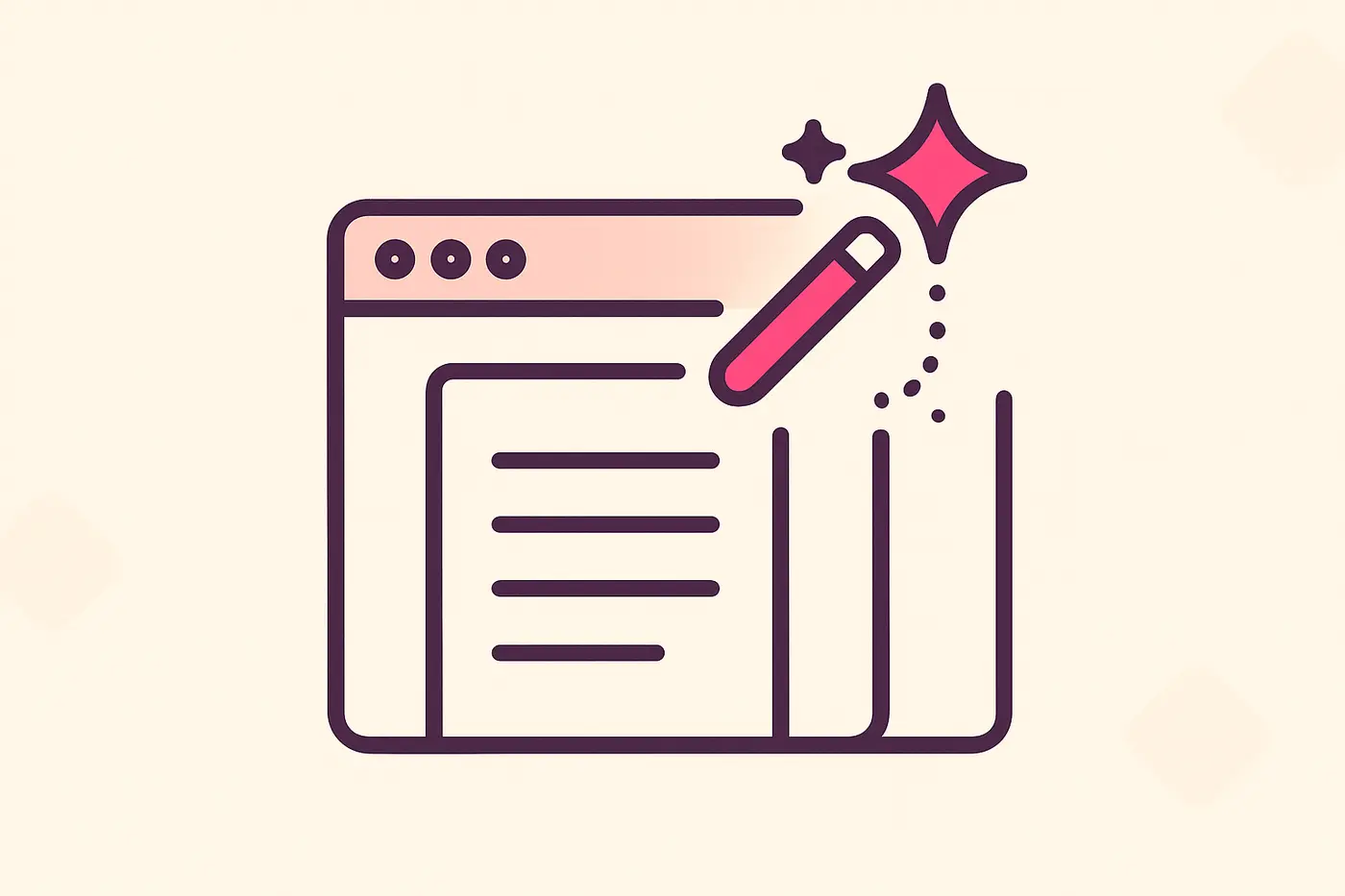
The other common mistake is treating a bad AI draft as a reason to regenerate the entire page and hope for better luck. Regenerating everything throws away the 80% that was already fine along with the 20% that wasn't, and a second full-page generation from the same thin prompt usually lands in the same generic territory anyway. SPION's AI drafting is built section by section on purpose — About, Highlights, FAQs, and Agenda each regenerate on their own, with a free-text box to tell it specifically what's wrong ("make the About section punchier" or "add a networking session to the agenda"). Nothing gets applied automatically either way: every regeneration shows you a preview first, and for list-style sections like Highlights and FAQs, you pick exactly which items to keep rather than accepting the whole batch. That loop — generate, review, keep what's good, redo only what isn't — is a much better use of AI than a single big "write my page" button.
When it's worth using
Use it to kill the blank page, not to finish the job. A one-sentence prompt into a drafting tool gets you a structured skeleton — sections in the right order, a plausible agenda shape, FAQs you wouldn't have thought to add — in less time than it takes to open a blank document and stare at it. From there, the highest-value five minutes you can spend are rewriting the one or two sentences that actually say why someone should buy a ticket, and regenerating just the section that still reads wrong instead of starting over. Organizers who treat AI as a first-draft machine and themselves as the editor get a noticeably better page, faster, than either doing it all by hand or publishing whatever the AI handed back.
Try it on your own event in under a minute
Describe your event in a sentence, and SPION drafts the whole page — About, agenda, highlights, FAQs, even a color theme. Nothing is saved until you review it.
Draft Your Event Page